Key Takeaways for SMT Processes:
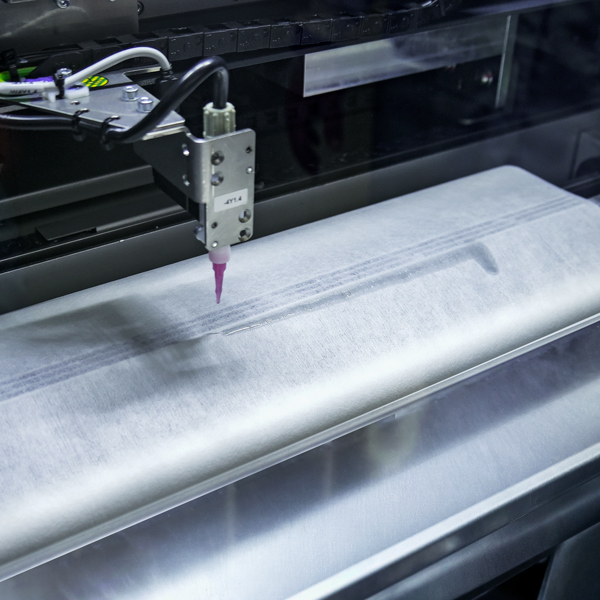
Under-stencil cleaning (underside wiping) is a critical, automated wipe cycle inside the SMT screen printer designed to remove microscopic amounts of solder paste and flux that inevitably bleed underneath the stencil foil during the squeegee stroke. Thorough cleaning of this section is not optional—it is a mandatory step to prevent catastrophic misprints.
In modern Surface Mount Technology (SMT), it is a widely accepted engineering fact that the majority of soldering defects are rooted in the printing phase. If the stencil underside is left contaminated, stray solder spheres and flux residues transfer directly onto the subsequent printed circuit board (PCB). Furthermore, utilizing the wrong cleaning fluid for this critical wipe cycle will not only fail to clean the stencil but will actively degrade your active solder paste roll, driving up your COPQ. DCT provides highly engineered, process-specific under-stencil cleaning fluids designed to maintain flawless aperture release without compromising paste viscosity.
Process engineers frequently battle with clogged apertures, especially on fine-pitch components, QFNs, and micro-BGAs where stencil foil thickness is minimal. A common, yet highly destructive, practice is using Isopropyl Alcohol (IPA) for the underside wipe. IPA has an extremely fast evaporation rate. During the wipe sequence, capillary action pulls the IPA into the stencil apertures. When it contacts the solder paste, it evaporates so rapidly that it actively draws the flux medium out of the paste. This leaves behind dry, hardened solder alloy particles that cure and permanently block the microscopic openings, leading to “starved” solder joints.
DCT’s specialized chemistries are formulated with precisely controlled evaporation rates. They successfully dissolve stray flux and paste from the underside of the stencil while remaining completely inert to the active paste roll on top. This ensures perfect, repeatable paste release (maintaining the correct thixotropic index) and prevents the degradation of delicate nano-coatings applied to high-end stencils.
When financial decision-makers analyze the SMT printing process, the hidden costs of misprints and unoptimized fluid consumption quickly become apparent. Because highly volatile solvents like IPA flash off rapidly at room temperature, SMT printers require a massive volume of fluid just to keep the wiper roll wet. A significant percentage of purchased IPA is lost to the factory exhaust system before it ever touches the stencil.
By switching to DCT’s engineered fluids with optimized evaporation profiles, manufacturing facilities instantly reduce their total chemical consumption. Because the fluid stays on the paper longer, less volume is pumped per cycle. Furthermore, by preventing aperture clogging and paste degradation, you eliminate the need to frequently discard “dried out” solder paste. Combined with drastically reduced labor and chemical costs associated with washing misprinted boards, facilities yield a highly stabilized printing process and a very rapid Return on Investment (ROI).
Safety and environmental compliance inside the automated printing environment cannot be compromised. Continuously pumping highly flammable solvents (like IPA) into an enclosed, motorized SMT printer presents a significant fire hazard and often requires strict, expensive ATEX-rated safety protocols. Furthermore, operator exposure to Volatile Organic Compounds (VOCs) when opening the printer hood is a major occupational health concern.
DCT leads the market by offering advanced, high-flash-point alcohol blends and fully water-based, pH-neutral alternatives. Our Decotron® series eliminates severe fire risks, significantly lowers factory VOC emissions, and ensures that your facility remains fully compliant with the latest environmental and occupational safety regulations, simplifying integration for project managers.
Selecting the correct under-stencil cleaning fluid depends on your specific solder paste formulation, aperture sizes, and environmental goals. All DCT fluids are designed to seamlessly integrate into the standard Wet/Vacuum/Dry wiping cycles of industry-standard SMT printers (such as DEK, MPM, EKRA, and Panasonic).
| Product Name | Chemical Base | Primary Application | Key Technical Feature |
|---|---|---|---|
| Proton® 29 | Alcohol-Based (100%) | Under-stencil Wiping | Fast, controlled evaporation; ideal for ultra-fine apertures. |
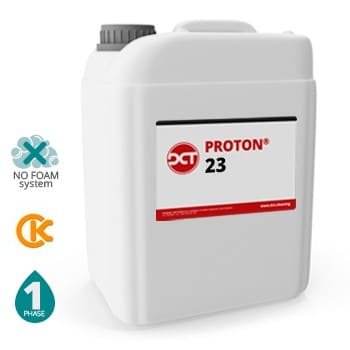
| Proton® 23 | Alcohol-Based (100%) | Under-stencil Wiping | Balanced evaporation rate; extended dwell time for high-tack pastes. |
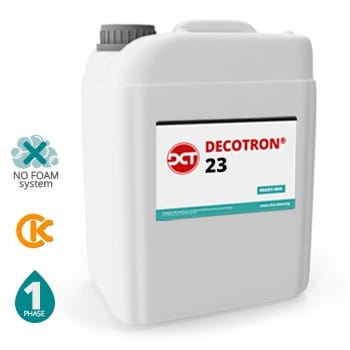
| Decotron® 23 | Water-Based (pH-Neutral) | Under-stencil Wiping | Low VOC, high flash point, exceptional environmental and operator safety. |
IPA has an extremely low flash point and evaporates too rapidly. During the wipe cycle, capillary action pulls the IPA into the stencil apertures. The rapid evaporation literally sucks the flux and solvent mediums out of the solder paste, leaving behind dry, hardened metallic particles. These particles clog the apertures, ruining subsequent print volumes and causing latent soldering defects.
Yes, if the wrong fluid is used. During the wipe process, the flow of the cleaning agent through the apertures and its interaction with the solder paste roll on top cannot be entirely prevented. An incompatible, highly aggressive cleaner will mix with the paste, altering its thixotropic index and viscosity. DCT fluids are chemically engineered to be highly compatible and inert to the active paste roll, ensuring the deposit remains consistent print after print.
Most modern SMT printers utilize a Wet-Vacuum-Dry wiping sequence. The wet paper applies the chemistry to dissolve the paste bleed-out. The vacuum cycle then physically sucks the dissolved paste and cleaning fluid out of the apertures and into the porous wiper paper. Using a DCT fluid with the correct surface tension ensures the fluid properly wets the paper and facilitates this capillary and vacuum action efficiently.
Absolutely. While alcohol-based fluids are traditional, advanced water-based fluids like Decotron® 23 are highly effective. They offer a balanced evaporation rate, meaning they do not dry out the solder paste. More importantly, they drastically reduce VOC emissions and eliminate the severe fire hazards associated with storing volatile solvents inside heated production equipment.
No. High-end stencils utilize delicate nano-coatings (often just a few nanometers thick) to repel flux and improve paste release. Aggressive, highly alkaline cleaners or harsh industrial solvents can strip this coating away. Our Proton and Decotron under-stencil fluids are pH-neutral and meticulously tested to ensure absolute compatibility with all advanced stencil treatments, extending the lifespan of your tooling.
While engineered fluids (like the Proton or Decotron series) have a higher initial cost per liter than standard IPA, the ROI is typically achieved within weeks. The savings come from drastically reduced total fluid consumption (optimized evaporation means less fluid is lost to the exhaust system), eliminated solder paste waste (no dry-out in apertures), and significantly reduced labor, rework, and scrap costs associated with misprinted PCBAs.
Do not let an unoptimized under-stencil wipe process be the root cause of your end-of-line failures. Protect your solder paste, extend the life of your stencils, and eliminate unnecessary rework by upgrading to DCT’s precision-engineered printer chemistries. Because every production line is unique, we bring innovation to every project—customizing solutions to fit your exact parameters.
Contact our technical engineering team today. Thanks to our worldwide network of local distributors and democenters, you get direct, local on-site support to optimize your process. When you implement our chemistry, we take 100% responsibility for the functionality and stability of your cleaning process. Instantly improve your first-pass yield with DCT.
Our laboratory has extensively tested and proven the compatibility and cleaning efficacy of our under-stencil fluids (Proton® and Decotron® series) against a wide array of industry-standard solder pastes and SMT adhesives. Below is a representative list of over 40 specific contaminants effectively removed during our wet wipe application testing:
| Manufacturer | Contaminant Type | Specific Product Designations |
|---|---|---|
| Alpha Assembly Solutions | Solder Paste (No-Clean / Water Soluble) | OM-340, OM-338, OM-353, CVP-390, UP78, CVP-520, OM-5100, OM-350, WS-826, WS-809, RMA-9086, OM-325, OM-338-T, OM-340-PT, OM-355 |
| Indium Corporation | Solder Paste (No-Clean / Halogen-Free) | 8.9HF, 8.9HFA, 5.8LS, 10.1, 10.1HF, 10.8, 3.2, NC-SMQ92J, NC-SMQ230, SMQ-92G |
| Koki Company Ltd. | Solder Paste (No-Clean / Anti-Pillow) | S3X58-M500C, S3X58-M406, S3X58-M650, S3X48-M406, TB48-M742 |
| AIM Solder | Solder Paste (No-Clean / Water Soluble) | NC254, NC257MD, NC258, NC273LT, NC280, WS715 |
| Senju Metal Industry | Solder Paste (Lead-Free / No-Clean) | M705-GRN360, M705-LFAC19, M705-SHF, M705-S101, M705-S101ZH |
| Henkel / Loctite | Solder Paste (Temperature Stable) | GC 10, GC 3W, LF 318, LF 320 |
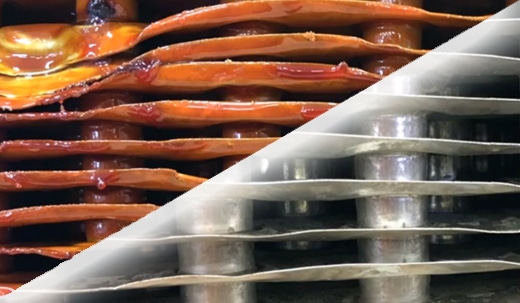
| Various Manufacturers | SMT Surface Mount Adhesives (Red Glue) | Loctite 3609, Loctite 3621, Fuji NE-8800T |
Note: The listed pastes and adhesives represent successfully tested contaminants in our laboratory environment utilizing Proton® 23, Proton® 29, and Decotron® 23 fluid formulations. Optimal fluid selection depends on specific process parameters.


100% RESPONSIBILITY FOR THE CLEANING PROCESS
We take full responsibility for the functionality of the cleaning process.
Complete cleaning solutions
We can offer complete cleaning solutions for all existing applications.
Quality of cleaning systems
We manufacture cleaning systems exclusively in stainless steel because it has long-term advantages.
pure quality of cleaning agents
We care about the functionality of the cleaning chemistry, but also about ecology.
Technical and economic improvements
With every project, our greatest motivation is to bring the customer a better technical and economic solution.
Development and customization
By continuously developing our cleaning technologies, we are moving forward and responding to developments in the electronics industry.
Democenters Worldwide
We give customers the opportunity to actually test the cleaning solution.
Direct service Support
For us, service support does not end with the installation, it begins.
Our references show the diversity of our customers and how we have been able to
to tailor our services to their needs and expectations.