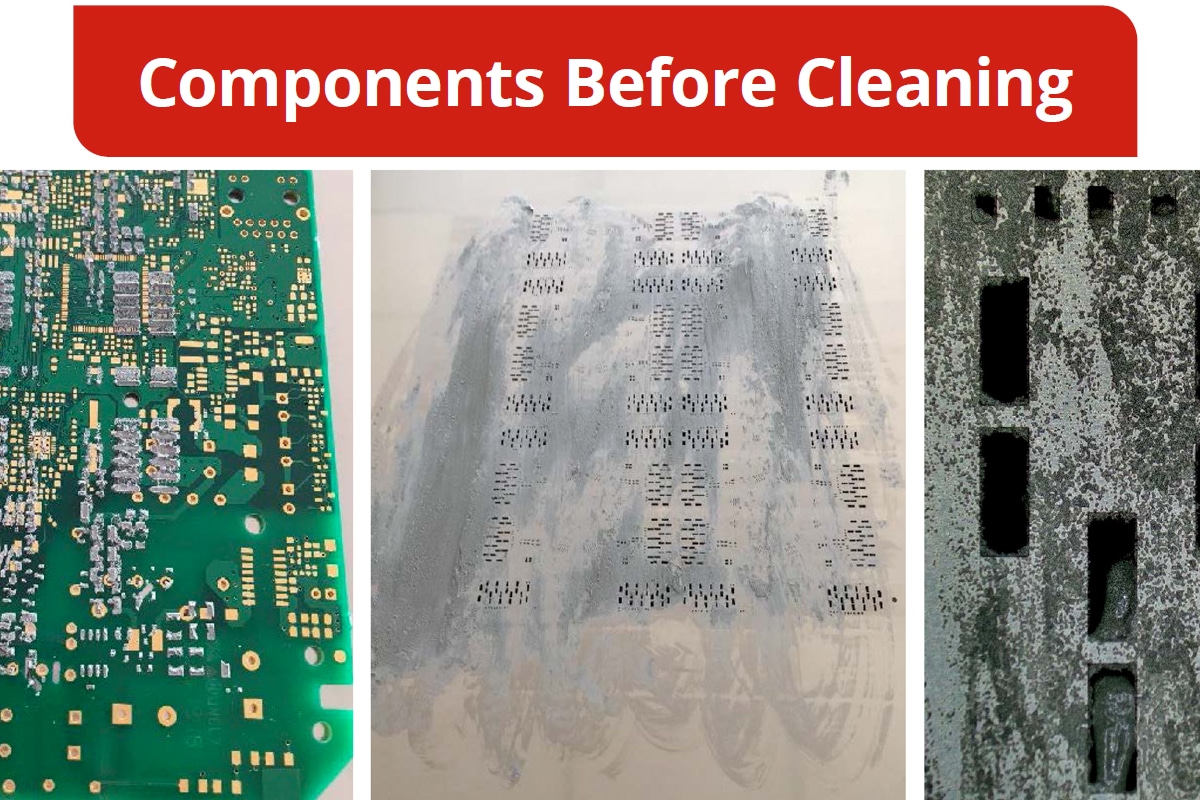
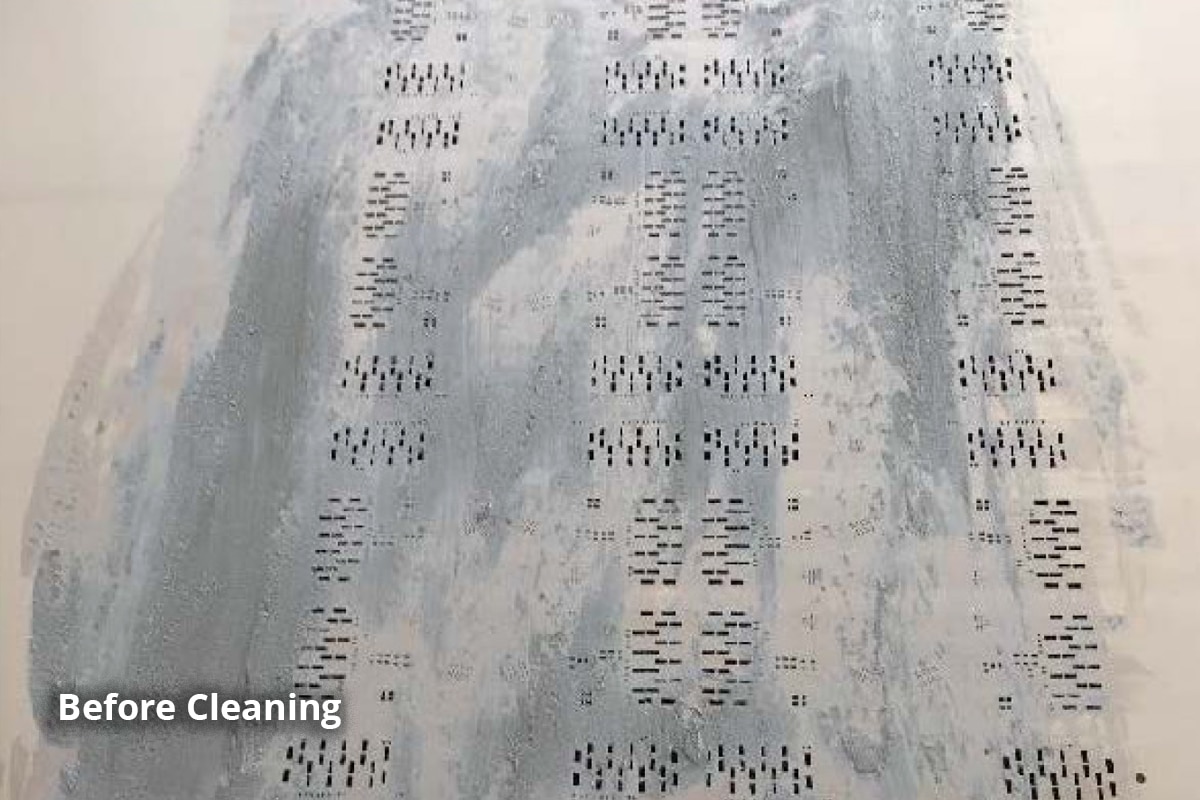
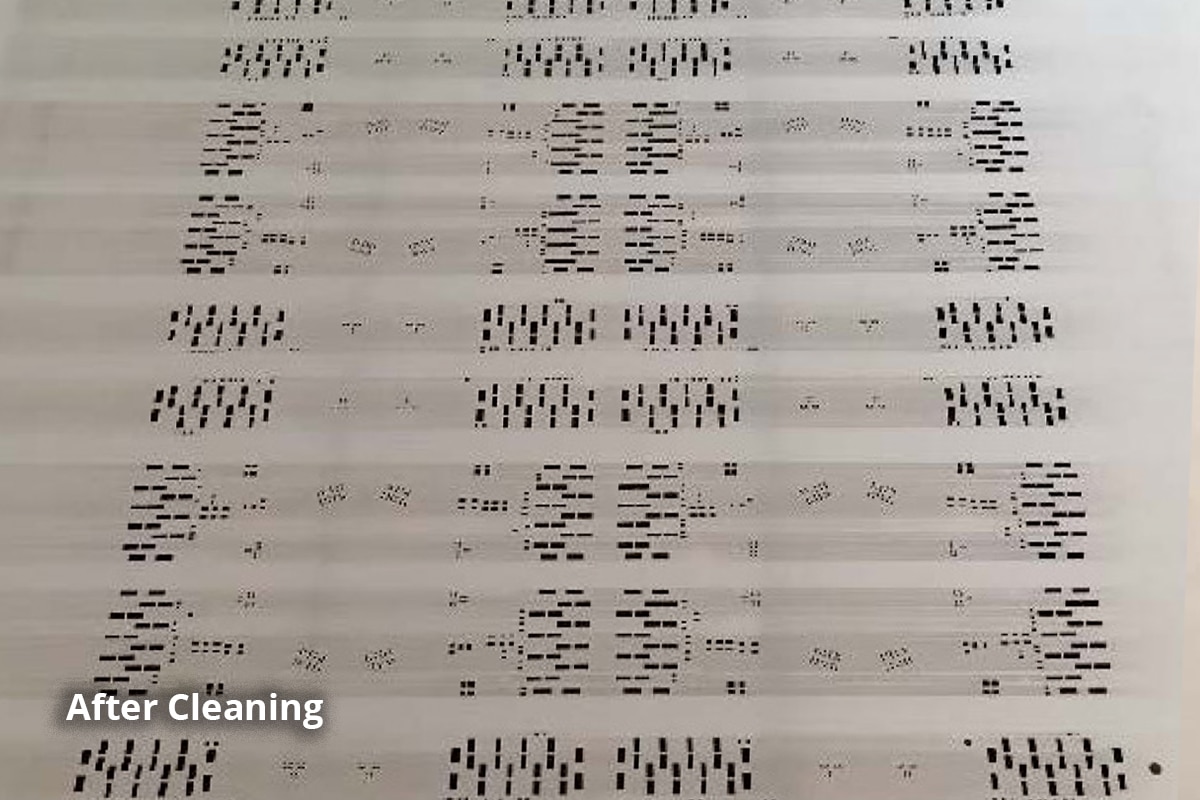
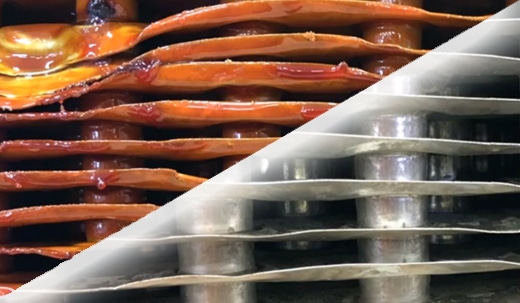
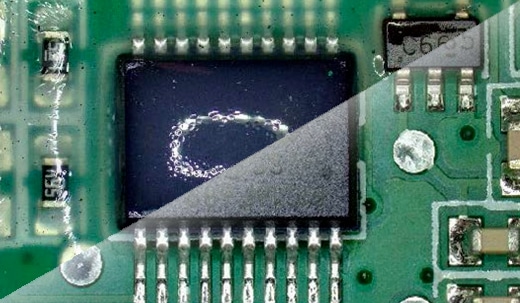
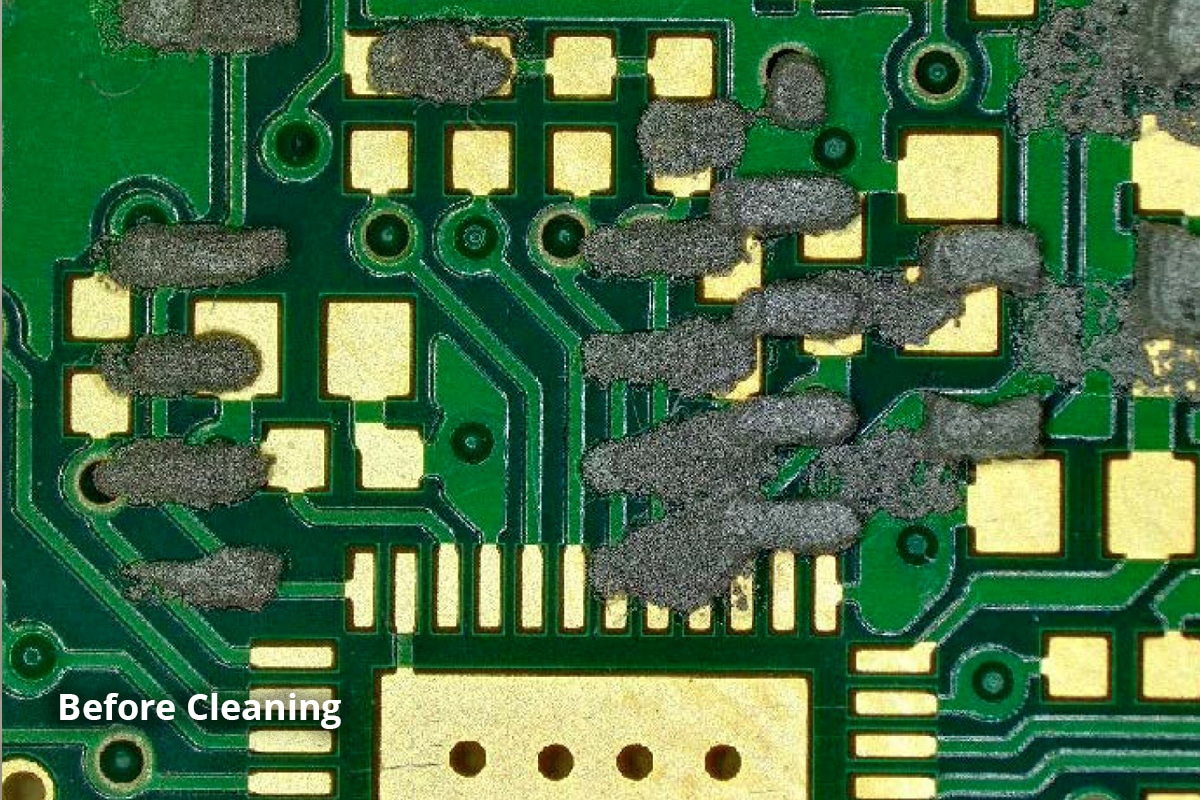
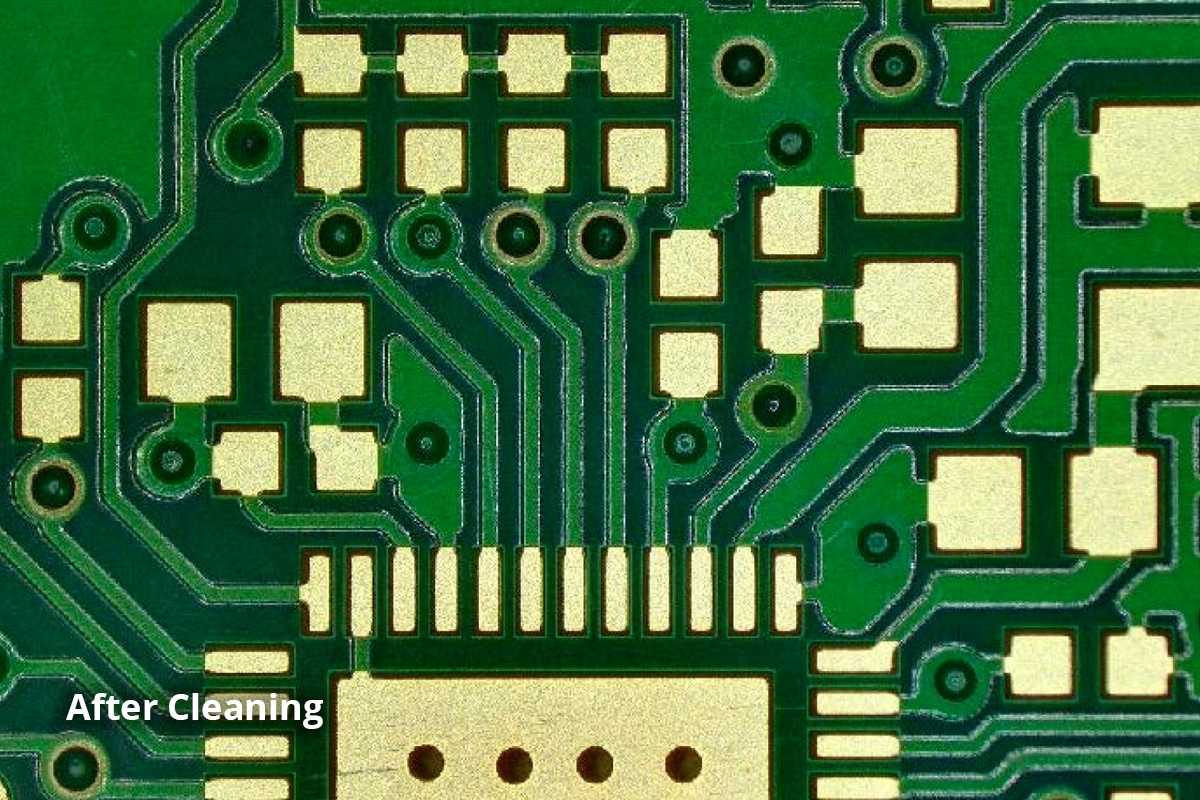
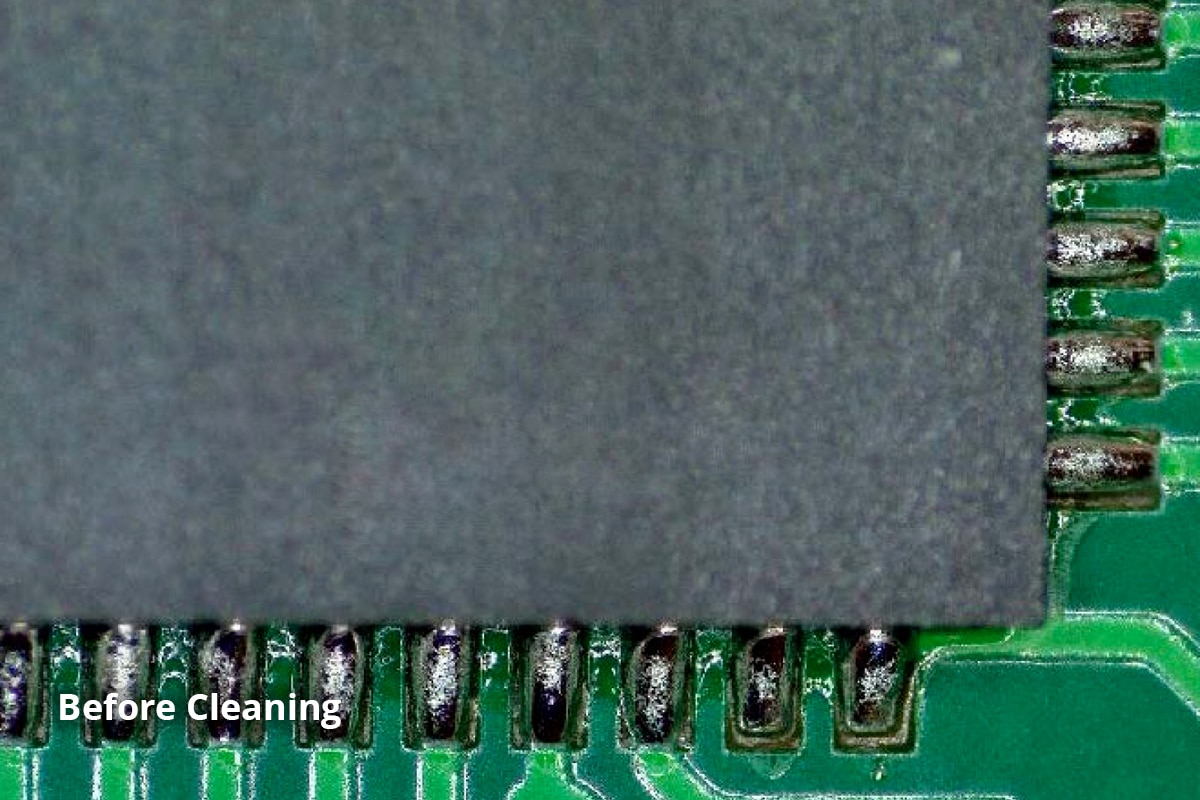
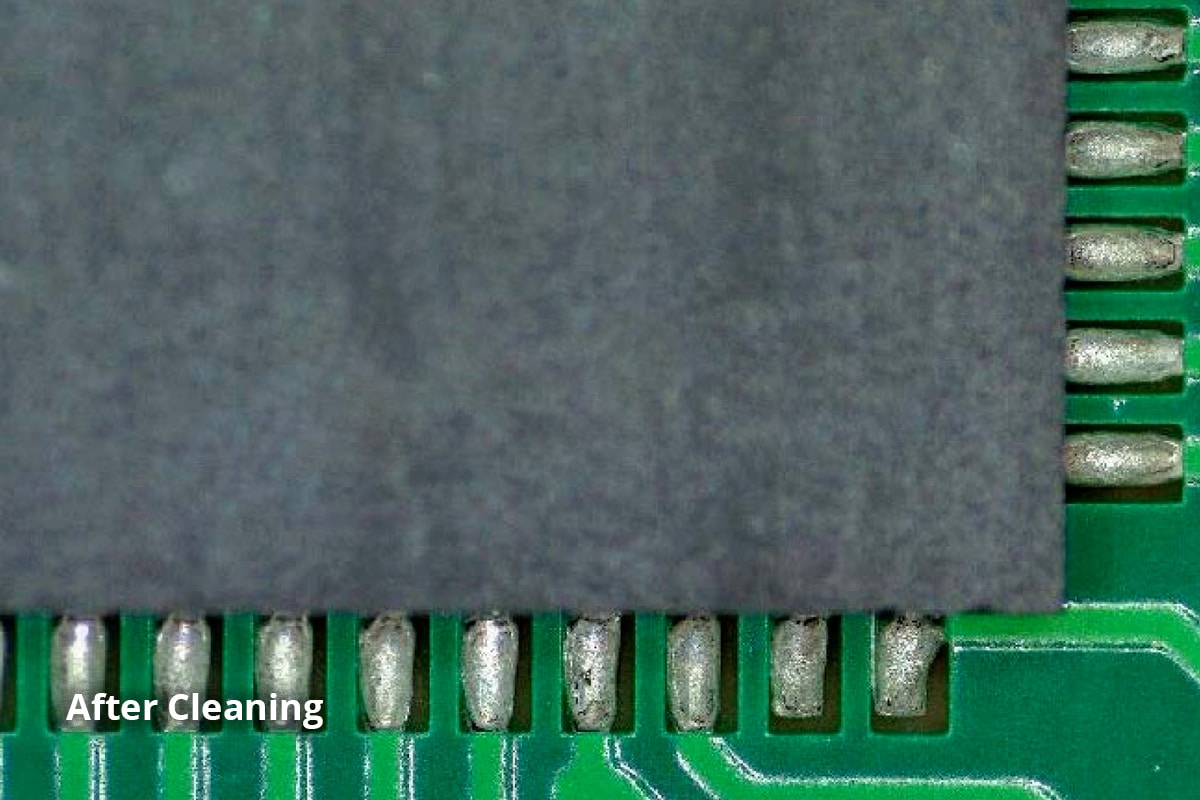
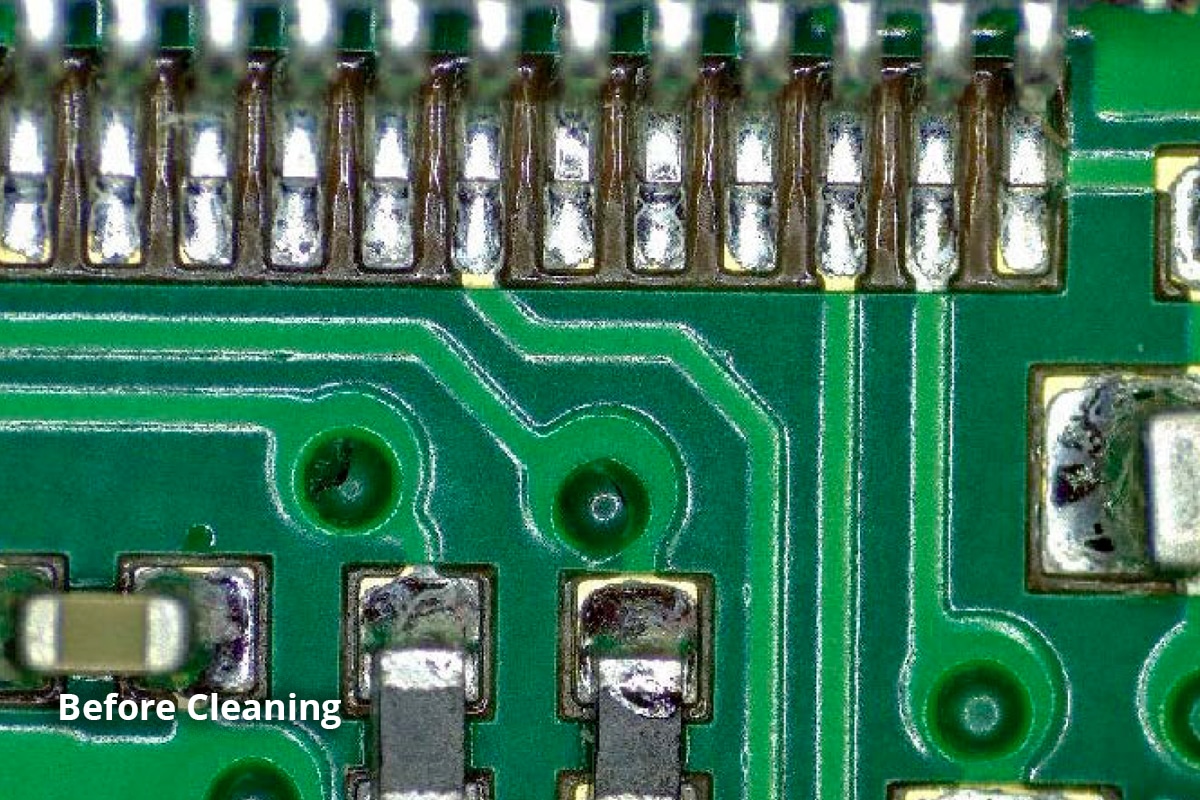
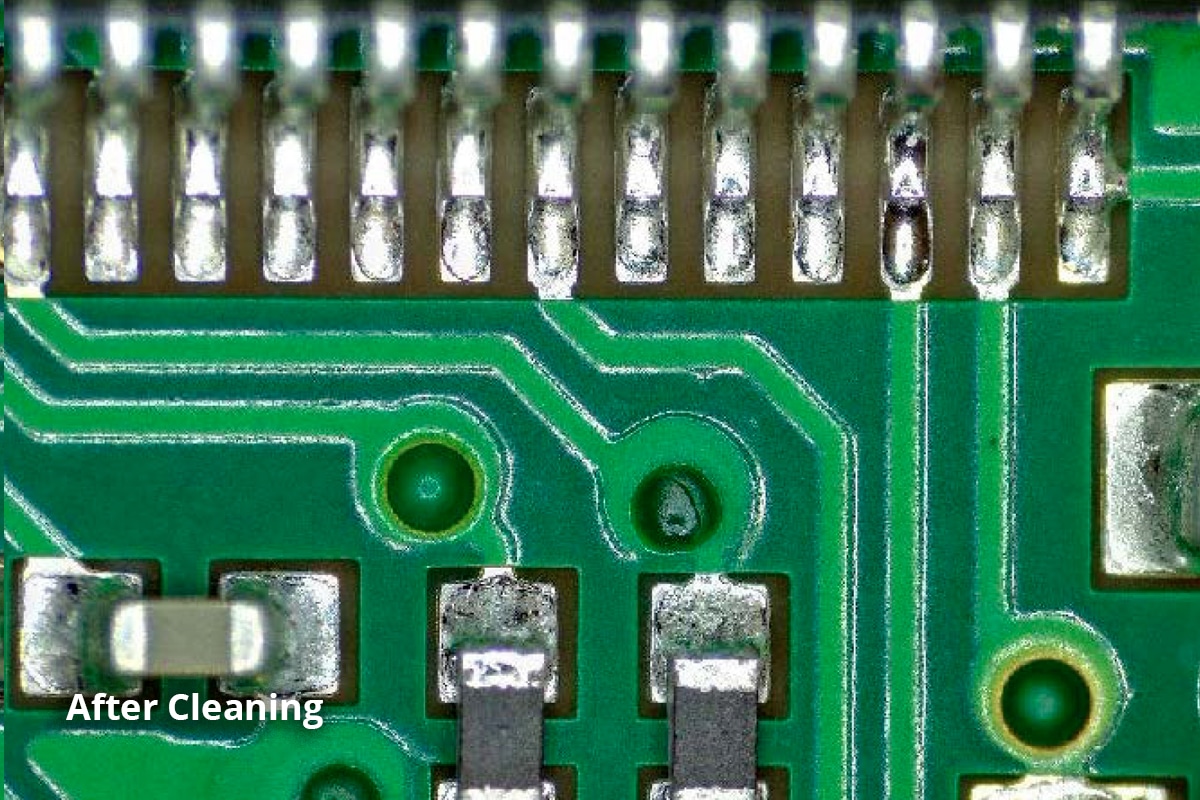
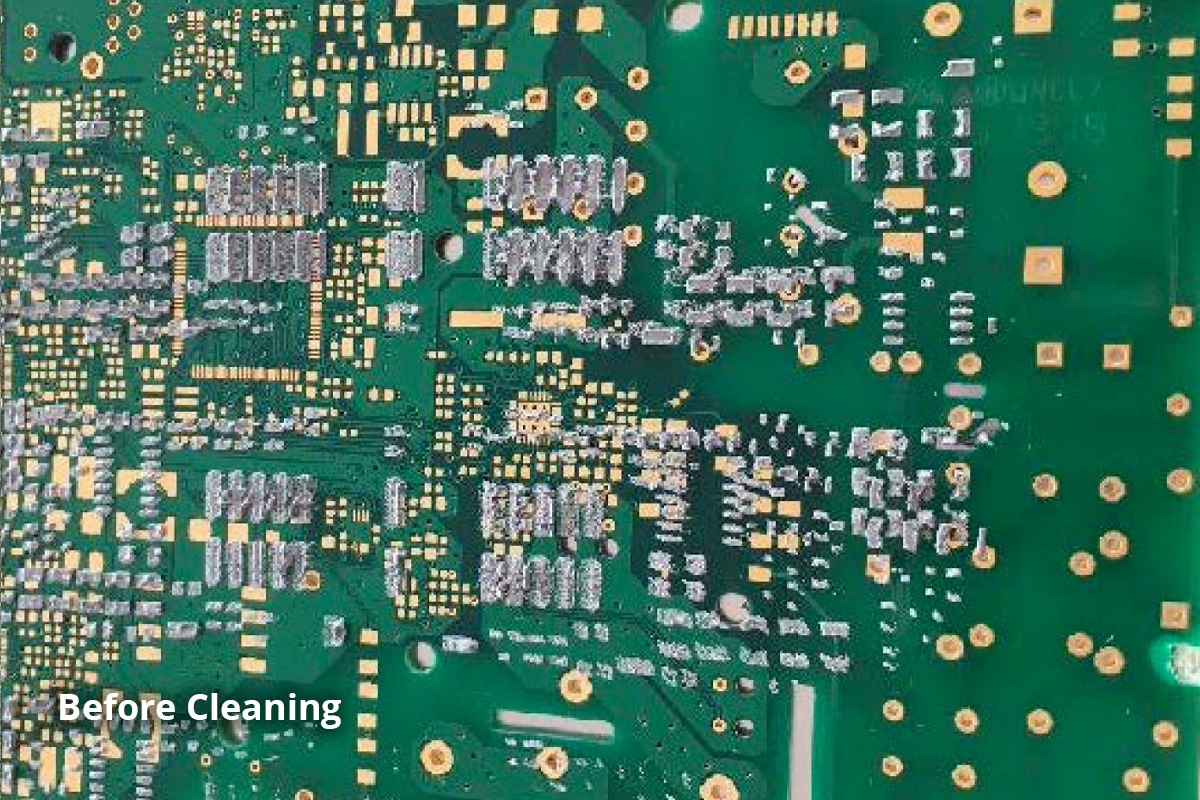
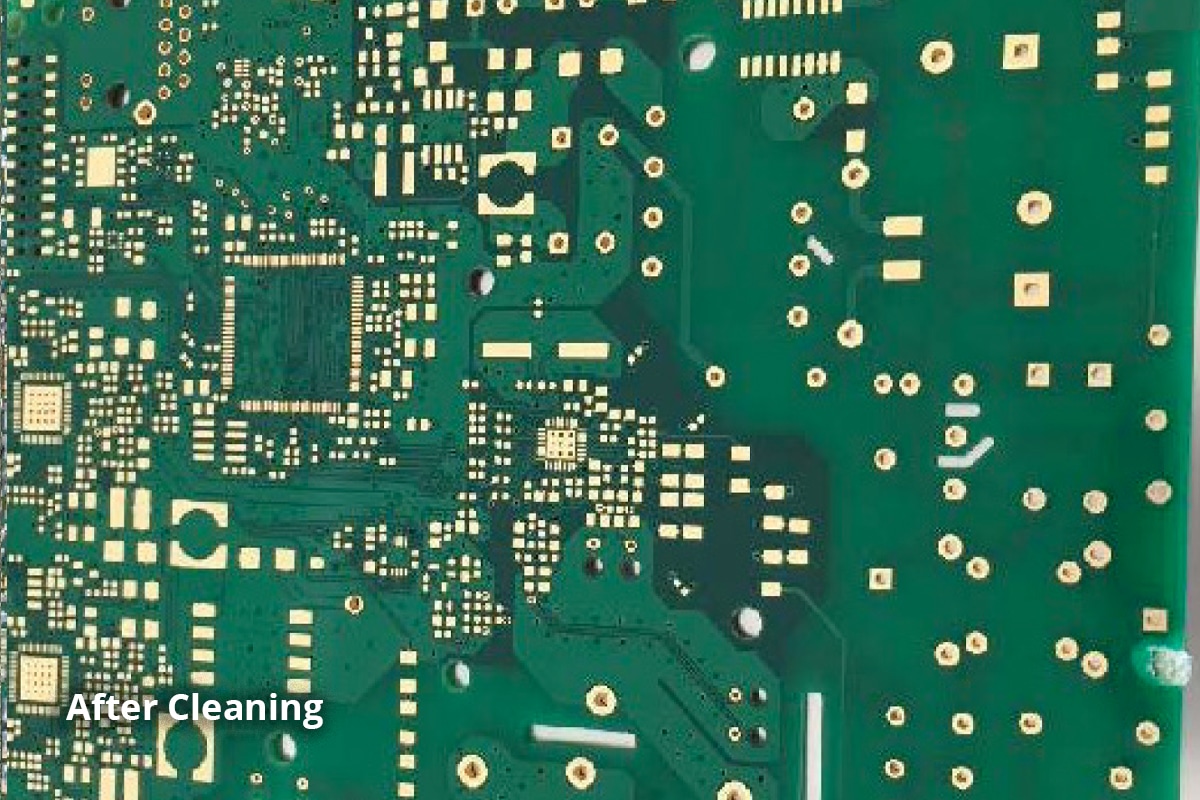
The customer used flammable and aggressive fluid to remove solder paste ALPHA OM-340 88-3-M1 from stencils, misprints, and PCBAs. This type of fluid was unfortunately also highly foaming. The customer’s need has been lower VOC, which would be consistent with the set limit, so in this case, we solved ecological problems, but also economical savings.
Our R&D Team Tested Cleaning of:
Type of Solder Paste: ALPHA OM-340 88-3-M1
Types of Cleaned Components: 2 panels of soldered PCBAs, 1 panel of PCBs without components
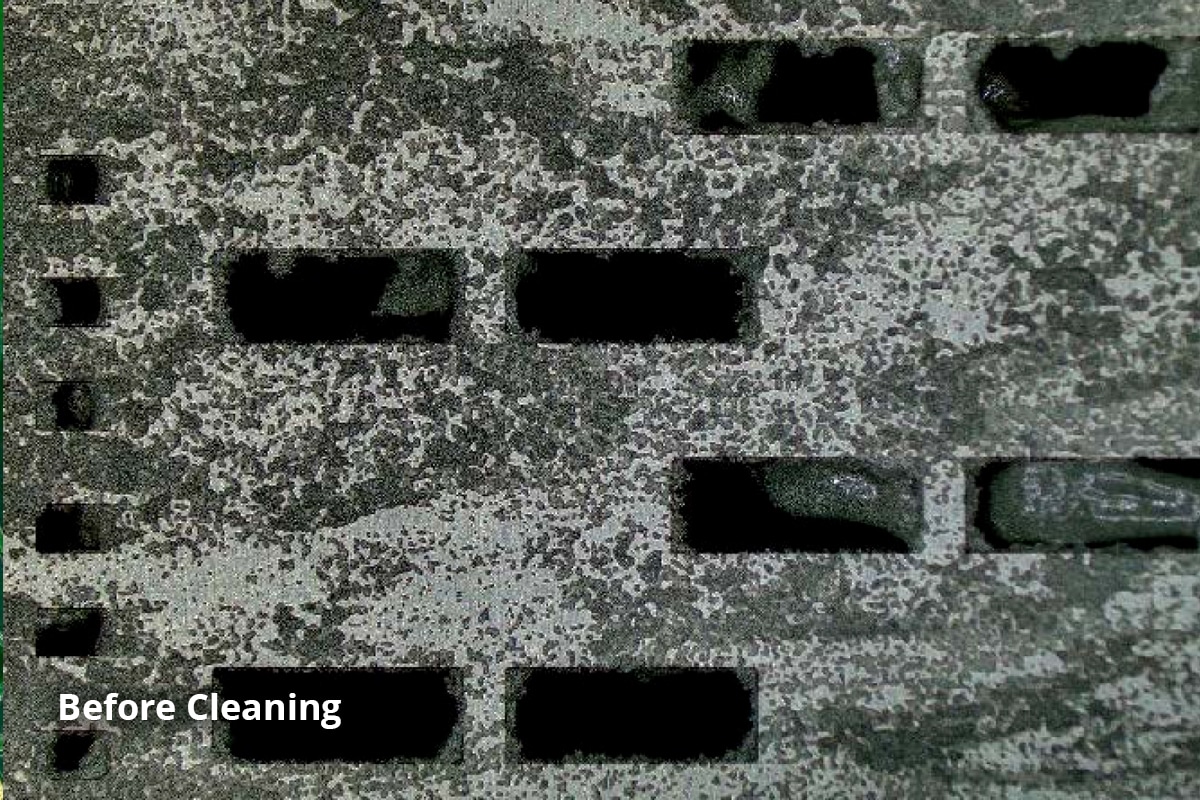
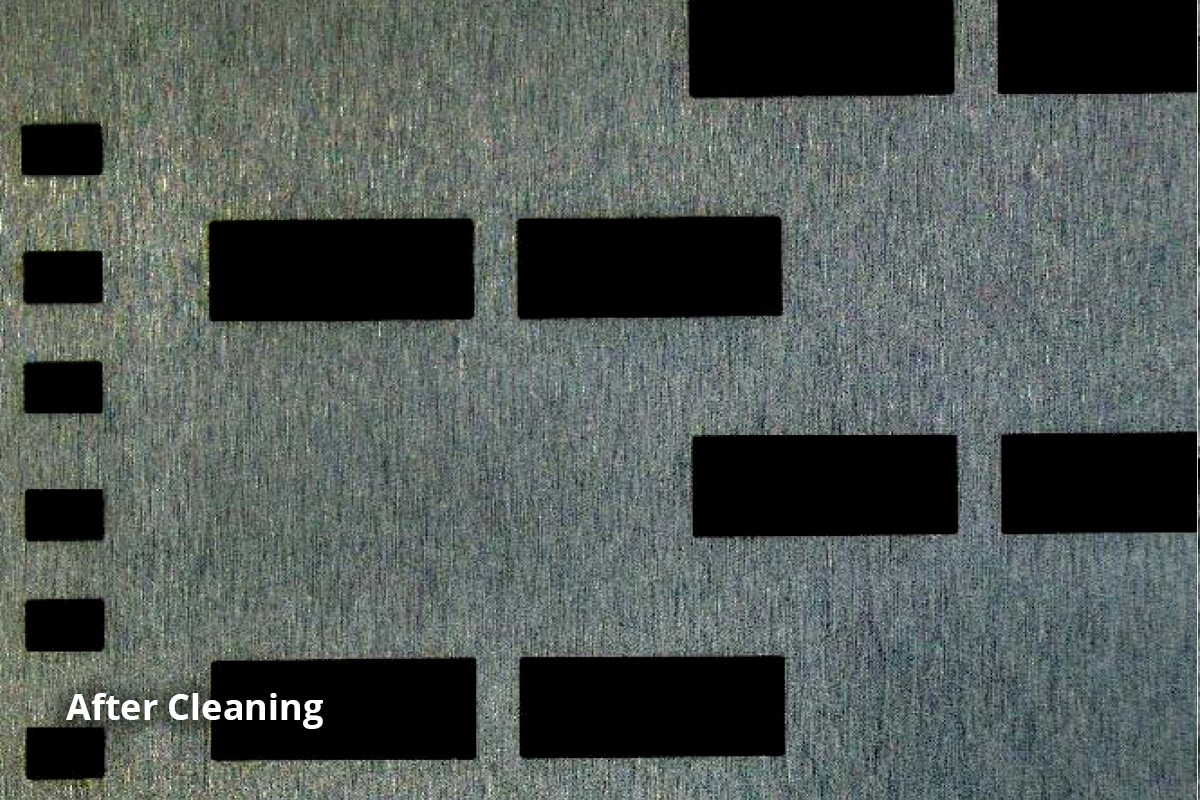
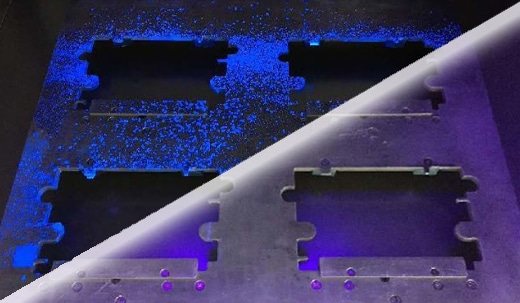
A) Printing stencils from unsoldered ALPHA OM-340 88-3-M1 solder paste
B) Misprints of ALPHA OM-340 88-3-M1 solder paste on PCBs
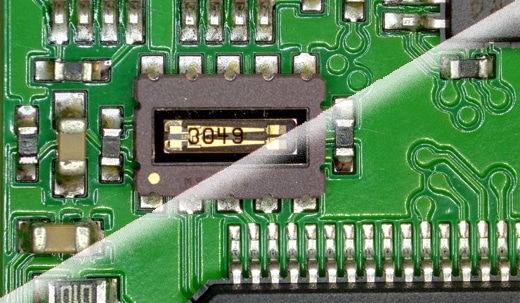
C) PCBAs after soldering process with ALPHA OM-340 88-3-M1 solder paste
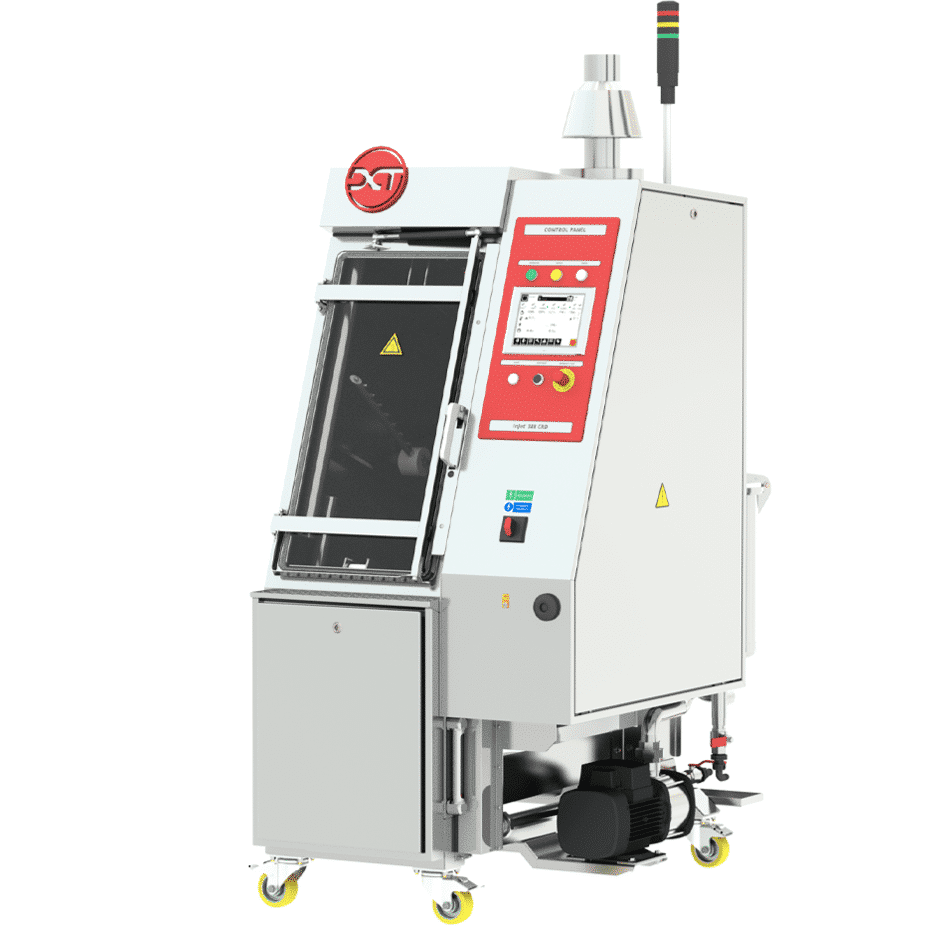
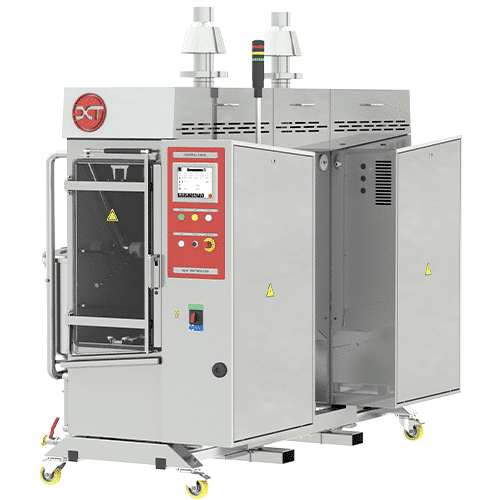
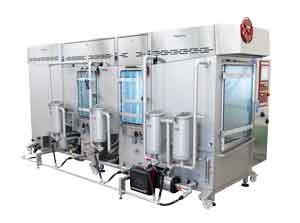
Transitioning to our highly advanced water-based cleaning technology, such as Decotron® CP381 combined with the InJet® 388 CRD system, delivers specific, measurable advantages across all operational departments.
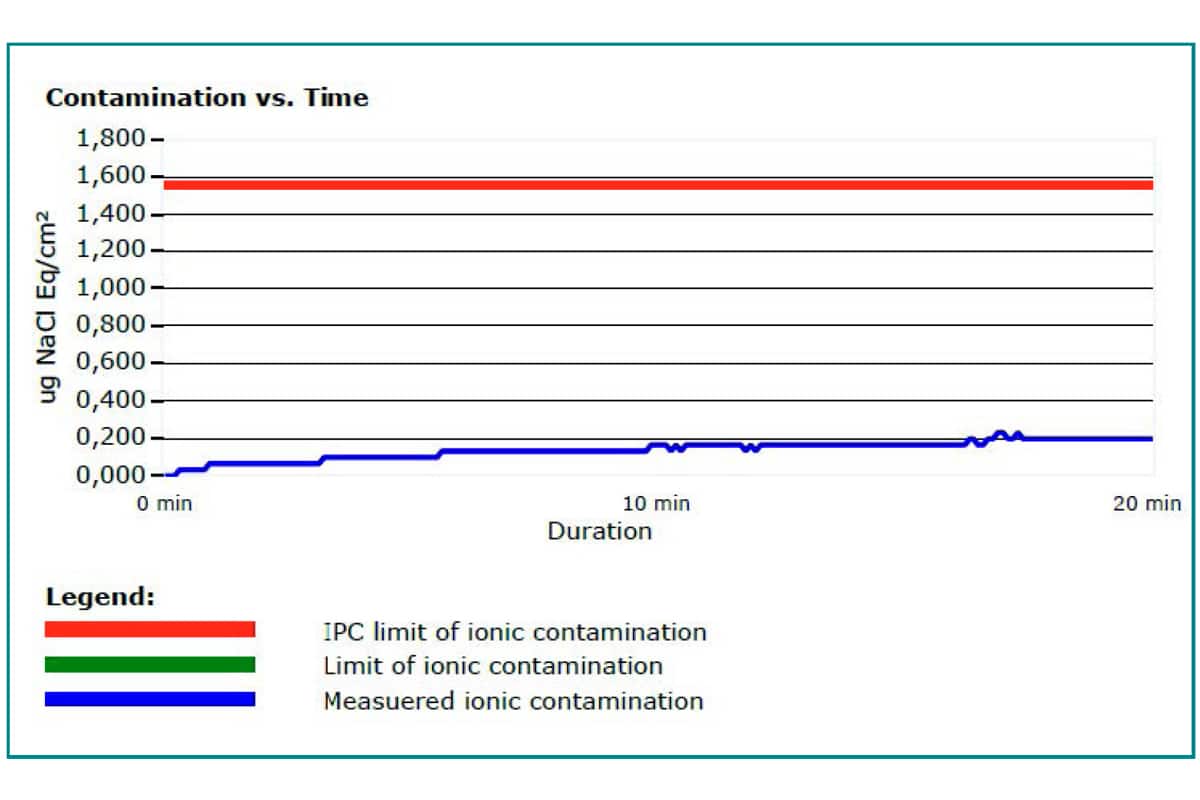
Achieve an uncompromising 100% cleaning success rate. In documented testing with the aggressive ALPHA OM-340 88-3-M1 solder paste, our automated spray-in-air process completely removed all residues. Following the cycle, independent ROSE (Resistivity of Solvent Extract) testing confirmed an ionic contamination level of just 0.198 μg NaCl/cm²—massively outperforming the stringent IPC maximum limit of 1.56 μg NaCl/cm².
Scrapping expensive, double-sided populated assemblies due to misprints is a direct hit to your profit margin. Our process safely recovers high-value B-side misprints without degrading existing components. Additionally, shifting to our stable, long-lasting water-based fluids significantly reduces bath changeover frequency, lowering both chemical consumption and hazardous waste disposal fees, which optimizes your Total Cost of Ownership (TCO).
Traditional stencil and misprint cleaning often relies on aggressive, highly foaming, and flammable solvents. Implementing our Decotron® water-based chemistry instantly eliminates fire and explosion hazards from the wash zone. It also drastically reduces Volatile Organic Compound (VOC) emissions, ensuring your facility effortlessly meets strict ecological regulations while safeguarding operator health.
Achieving zero-defect cleanliness requires the perfect synchronization of mechanical energy and fluid chemistry.
| Product Name | Primary Application | Key Technical Feature |
|---|---|---|
| InJet® 388 CRD | Hardware: Automated System | Vertical Spray-In-Air technology; programmable dual-cycle options to mitigate shadowing and ensure penetration. |
| Decotron® CP381 | Fluid: Misprints & PCBAs | Water-based, ready-mix fluid. Non-foaming, low VOC, and exceptionally safe for sensitive components on misprints. |
| Decotron® 290 | Fluid: Stencils & Squeegees | Optimized alkalinity prevents cross-contamination and breaks down raw paste matrices without damaging nano-coatings. |
We have performed ROSE (resistivity of solvent extract) test after cleaning with Decotron® CP381 cleaning agent in Injet® 388 CRD cleaning system.
IPC limit of ionic contamination (red line) corresponds to 1,56 μg NaCl/cm2.
Limit of ionic contamination (green line) is an option to enter your own limit – in this case the limit was not specified by the customer.
Result of measured ionic contamination (blue line) is 0,198 μg NaCl/cm2
Decotron® CP381 for all three applications with set parameters described in this case study.
Other recommended
cleaning systems
Yes. The InJet® 388 CRD is designed as a highly versatile multi-purpose chamber. By using the appropriate adjustable fixtures, programming the specific cycle time, and utilizing a universally compatible fluid like Decotron® CP381, you can transition between stencils and PCB misprints without issue.
It requires sophisticated material compatibility. Decotron® CP381 effectively breaks down and strips the uncured raw paste on Side B while leaving the fully cured, soldered joints and components on Side A perfectly intact and untouched.
Isopropyl Alcohol (IPA) flashes off far too quickly to properly break down the flux matrix. Manual wiping merely spreads the sticky flux film and pushes microscopic solder spheres underneath low-standoff components, guaranteeing latent shorts and dendrite growth later. Automated washing ensures total removal.
Not with the correct chemistry. While aggressive alkaline solvents can degrade nano-coatings, our specific formulations (like Decotron® 290) are carefully balanced. They provide the solvency to dissolve raw paste without chemically attacking or stripping advanced stencil treatments.
Excessive foaming causes pump cavitation and pressure drops in standard machines. DCT chemistries are engineered to remain inherently stable and foam-free even under the high-pressure agitation of our Vertical Spray-In-Air manifolds, ensuring consistent kinetic impact.
The customer was satisfied with the results as we provided them with a more eco-friendly and sophisticated cleaning agent, which will lower their VOC, and which is also more economical speaking in the long term view.
Stop risking field failures and excessive VOC limits with fragmented solutions. Bring true innovation to your next project with a partner who takes 100% responsibility for your success.
Through our worldwide local distributor network, we are ready to analyze your specific SMT challenges. Send us your most difficult misprints or stencils, and we will perform a comprehensive, documented cleaning test.
Contact your local DCT distributor today to schedule your risk-free cleaning trial.