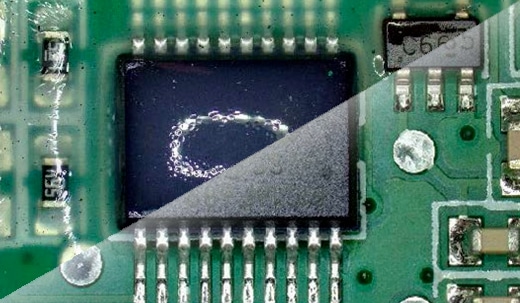
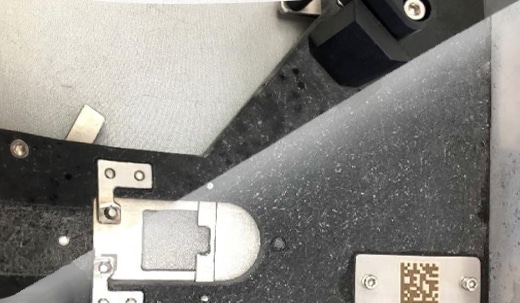
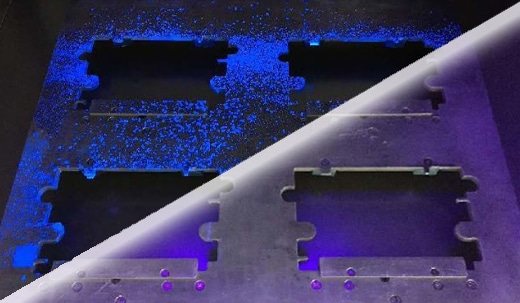
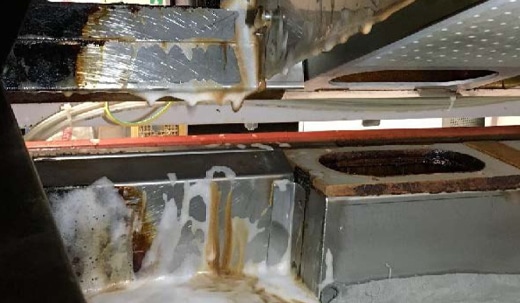
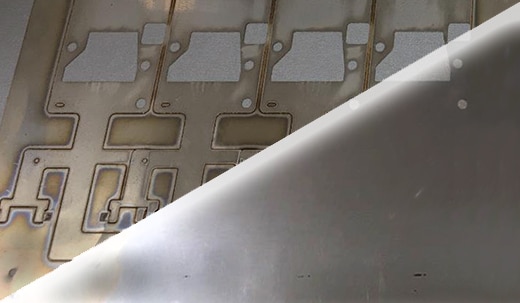
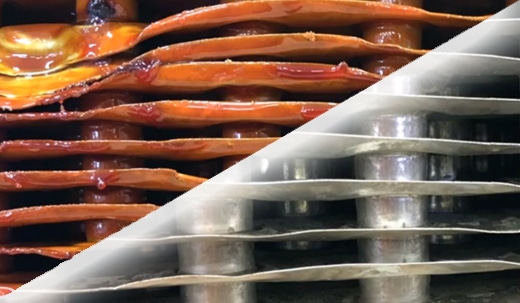
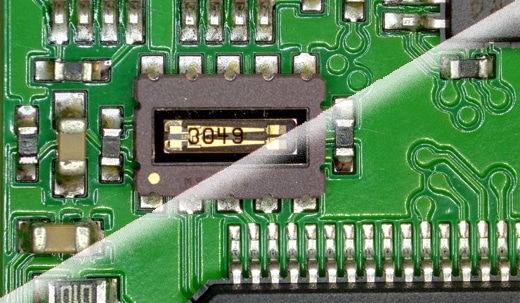
In the high-precision world of Surface Mount Technology (SMT), the printing process is often the most vulnerable stage of production. Industry data suggests that approximately 70% of assembly defects originate during solder paste printing. Clogged apertures, dried flux residues, and contaminated squeegees lead directly to solder bridging, solder balling, and insufficient joints. The “Cost of Poor Quality” (COPQ) is not merely limited to rework; it encompasses potential field failures in critical automotive, aerospace, and medical electronics where reliability is non-negotiable.
DCT Czech provides a validated, closed-loop cleaning process that transitions manufacturers from risky manual cleaning with Isopropyl Alcohol (IPA) to automated, high-efficiency aqueous systems. Our synergy of 100% stainless steel hardware and proprietary chemical formulations ensures that your stencils—including fine-pitch and nano-coated variants—are returned to production in an analytically clean state.
Choosing the right combination of hardware and chemistry depends on your paste type, stencil volume, and specific contamination challenges (e.g., SMT adhesives vs. solder paste).
| Product Name | Primary Application | Key Feature |
|---|---|---|
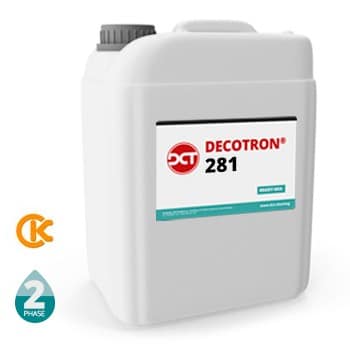
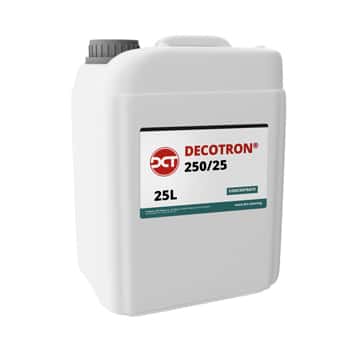
| Decotron® 250 | Unsoldered Solder Paste | pH neutral, high capacity, water-based. |
| Decotron® 290 | Sticky Residues / Silicone Paste | Combines slight alkalinity with non-polar solvency. |
| Decotron® CP381 | Misprints & Stencils | Alkaline formulation with corrosion inhibitors. |

| Proton® 703 | Silicone Glue/Encapsulants | Alcohol-based solvent for total silicone dissolution. |
| Stencil Cleaner 11 | Manual Pre-cleaning | Ready-to-use sprayer, fast-drying, residue-free. |
While IPA is a common solvent, it has a low flash point (15°C), posing high fire risks. Furthermore, its rapid evaporation can lead to solder paste “slumping” or drying out in apertures before it is fully removed. Aqueous agents offer a higher cleaning capacity, lower VOC impact, and a much safer workplace environment.
Some modern solder pastes use silicone resins to encapsulate activators. These resins create a low-surface-energy film on the stencil that repels standard water-based cleaners. Instead of removing the paste, the machine merely shifts it around. Specialized agents like Decotron® 290 are designed to break this surface tension and achieve 100% cleanliness.
Yes, but the process must be carefully managed. Some adhesives can cure when they come into contact with the wrong chemistry, potentially blocking nozzles. We recommend our InJet® systems with separate cleaning loops or specialized fluids like Proton® 69 to handle both contaminants effectively.
No, provided the correct pH-neutral chemistry is used. Our pH-neutral Decotron® 250 series is specifically validated to be gentle on sensitive nano-coatings while still effectively removing aggressive solder pastes.
Our InJet® systems feature real-time conductivity monitoring. The machine will notify you automatically when the DI water exceeds the programmed conductivity limit (typically < 10 μS for rinsing). This ensure that every stencil is rinsed with high-purity water, preventing the redeposition of salts.
Contact DCT Czech for a complete process analysis and a validated cleaning trial in our laboratory. We don’t just sell machines; we guarantee a clean result.
Perfectly clean stencils (with and without frames) and squeegees are one of the basic prerequisites for the overall quality of SMT production. It is very important to pay attention to cleaning quality, especially nowadays with the miniaturisation of components, as this is the only way to avoid subsequent production failures.
Poorly cleaned stencils with soldering paste and SMD adhesive residues result in the production of improper pre-prints the subsequent repair of which (misprint cleaning) leads to increased costs and prolongs the overall process. If you are not sure about the correct cleaning technique, please contact us and we will test your samples free of charge and recommend both a cleaning liquid and a cleaning system.
| Cleaning System | Primary Application | Key Feature |
|---|---|---|
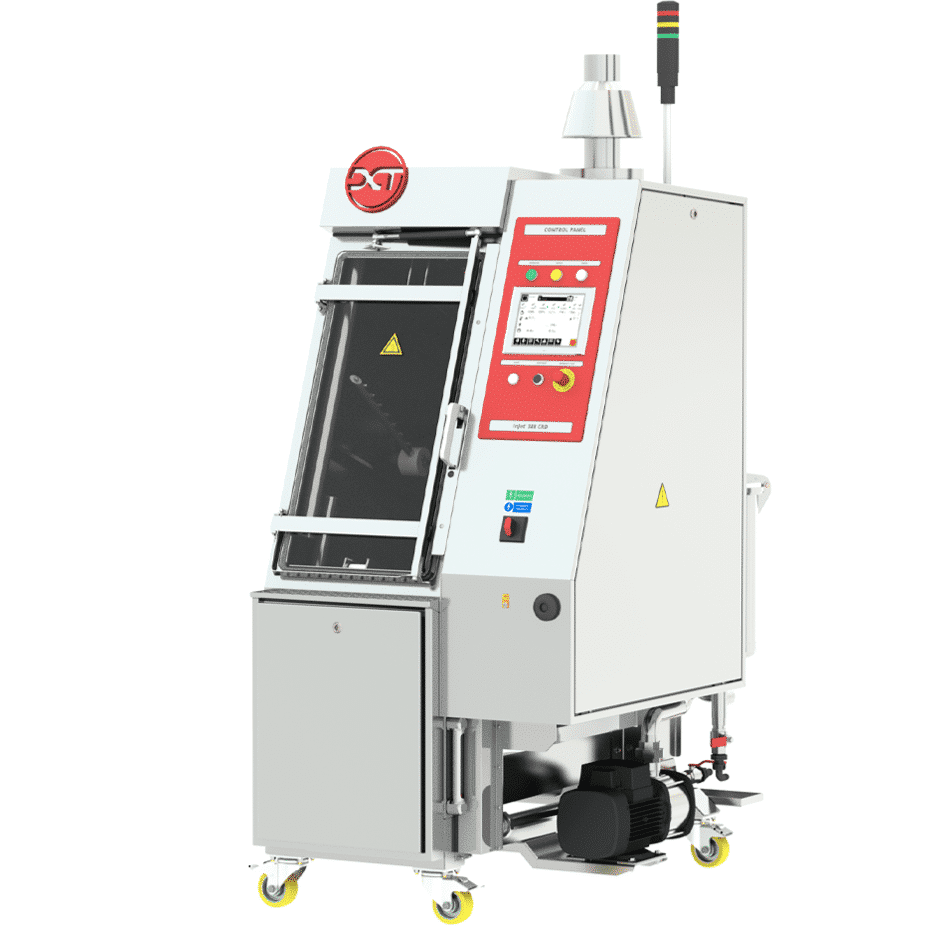
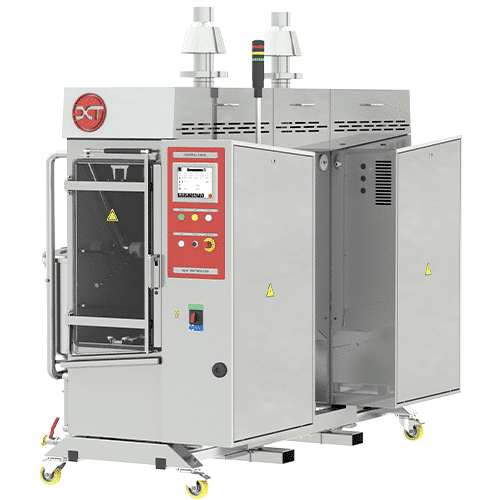
| InJet® 388 TRIPLE CRRD | High-capacity automated production | 3 separate chambers for parallel cleaning, rinsing, and drying. |
| InJet® 3179 (Big Board) | Extra-large stencil formats | Capacity for stencils up to dimensions of 100 x 1700 x 900 mm. |
| InJet® 388 CD | Entry-level stencil and squeegee cleaning | Compact, fully automated clean-rinse-dry cycle. |
| Feature | Isopropyl Alcohol (IPA) | DCT Water-based Systems (Decotron®) |
|---|---|---|
| Flash Point | 15 °C (High fire hazard) | Non-flammable (Safe for operation) |
| Process Quality | Risk of paste drying in apertures | High cleaning performance and stable process |
| Sustainability | High VOC emissions | Low VOC impact, closed-loop filtration |
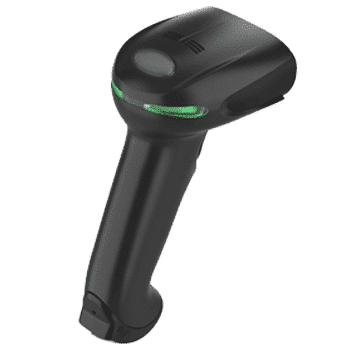
DCT systems enable full traceability of the cleaning process in compliance with automotive industry standards:
100% RESPONSIBILITY FOR THE CLEANING PROCESS
We take full responsibility for the functionality of the cleaning process.
Complete cleaning solutions
We can offer complete cleaning solutions for all existing applications.
Quality of cleaning systems
We manufacture cleaning systems exclusively in stainless steel because it has long-term advantages.
pure quality of cleaning agents
We care about the functionality of the cleaning chemistry, but also about ecology.
Technical and economic improvements
With every project, our greatest motivation is to bring the customer a better technical and economic solution.
Development and customization
By continuously developing our cleaning technologies, we are moving forward and responding to developments in the electronics industry.
Democenters Worldwide
We give customers the opportunity to actually test the cleaning solution.
Direct service Support
For us, service support does not end with the installation, it begins.