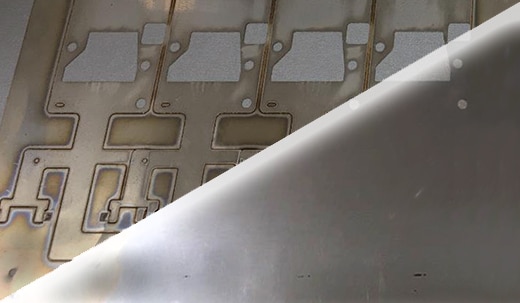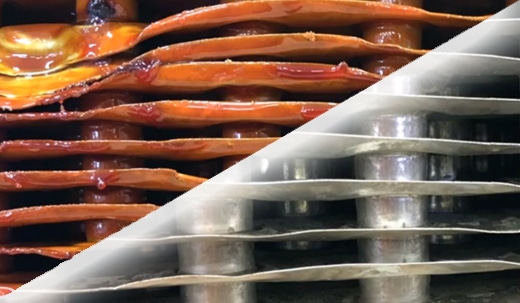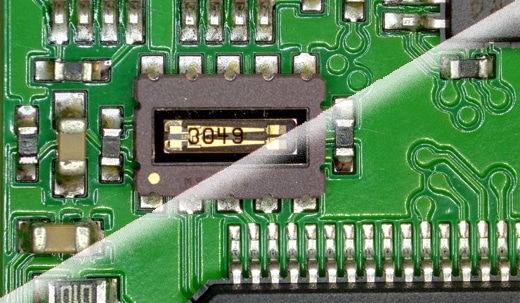
Remove post-solder flux residues with a cleaning process built around the specific assembly, soldering material, required cleanliness, and production capacity.
DCT combines cleaning systems, cleaning fluids, rinsing, drying, and process validation. When a DCT cleaning system and DCT cleaning fluid are used together, DCT takes 100% responsibility for the functionality of the cleaning process.
Request a cleaning test
Review the selection process
PCBA cleaning removes flux residues and other process contamination after soldering. The objective is a clean, rinsed, and dry assembly that meets the cleanliness requirement defined for the product and its next manufacturing step.
Cleaning becomes more demanding when residues are trapped under low-standoff components, assemblies contain complex connectors, or several soldering cycles have thermally stressed the flux. A result that appears visually clean may still require an ionic-cleanliness test when the application demands it.
| Cleaning fluid | Documented use | pH | Selection note |
|---|---|---|---|
| Decotron® 417XP | Post-solder flux residues, including modern no-clean solder pastes | pH-neutral | Frequently selected for difficult modern fluxes and assemblies with material-compatibility requirements. Compatibility still requires testing. |
| Decotron® CP381 | Post-solder flux residues and selected combined applications | 10-11 | Alkaline, water-based fluid. DI-water rinsing is required, and the process must be checked against assembly materials. |
| Decotron® 411A | Difficult post-solder flux residues and under-component cleaning | 11 | Alkaline, water-based fluid with documented use on demanding residues. Some low-resistance plastics may be affected. |
Review the DCT cleaning-agent category
| Required capacity | System starting point | Process consideration |
|---|---|---|
| 50-300 PCBAs per shift | InJet® 388 or InJet® 388 TWIN configurations | Vertical high-pressure spray-in-air is used to reduce shadowing. The exact chamber and rinse configuration depends on the process. |
| 300-600 PCBAs per shift | InJet® 3179 CRD BigBoard or selected InJet® 888 configurations | Board format, holder design, and the possible shadowing effect of a horizontal arrangement must be evaluated. |
| 600-2,000 PCBAs per shift | InJet® 388 DOUBLE TRIPLE CRRD | Separate process chambers support high-capacity cleaning, pre-rinsing, final rinsing, and drying. |
Times and temperatures shown in laboratory reports apply to the tested samples and machine configuration. They are not universal settings for every PCBA.
DCT test reports show that the same fluid can produce different outcomes when component geometry, thermal history, holder orientation, rinse quality, or drying requirements change. The recommended process is therefore based on a sample test and defined acceptance criteria.
No. The soldering material, residue age and thermal history, component geometry, board materials, required cleanliness, load, and machine configuration can change the result. DCT confirms the process with representative samples.
Small clearances restrict fluid exchange beneath the component. Chemistry, mechanical action, cleaning time, orientation, rinsing, and drying must work together, and some geometries can remain at the limit of what the process can reach.
Not necessarily. Visual inspection and ionic-cleanliness testing answer different questions. The validation method should match the product requirement.
Cleaning releases contamination, but rinsing must remove both the released residues and the cleaning fluid. Drying must then remove retained moisture from connectors, holes, and other critical geometry.
DCT starts with the exact soldering material, PCBA construction, material risks, cleanliness target, and production capacity. Candidate fluids and settings are then tested on representative samples.
Yes. DCT reports document both compatible combinations and cases involving label lifting, ink changes, plastic sensitivity, or seal swelling. Compatibility must be checked during process validation.
Send DCT the exact solder paste or flux designation, representative freshly soldered PCBAs, target cleanliness, board dimensions, critical materials, required capacity, and any known drying challenges.
A DCT specialist can use this information to define the test scope and propose a machine, fluid, rinse, drying, and verification concept.
Email: info@dct.cleaningThe records below summarize documented DCT tests on soldered PCBs or PCBAs. They demonstrate prior experience, not a universal fluid recommendation. A current process must be confirmed with the actual assembly, soldering material, acceptance criteria, and production equipment.
| Contamination / trade designation | Contamination type | Application / cleaned part | Successfully used DCT fluid | Documented test note |
|---|---|---|---|---|
| Alpha CVP 390V | Post-solder flux residue | PCBA after soldering | Decotron® 417XP | All surface residues were removed in 5 minutes in the documented test. |
| Indium SN62 NC-SMQ92J Type 3 | Post-solder flux residue | PCBA after soldering | Decotron® 417XP | All flux residues were removed; label and ink compatibility varied by component. |
| Indium 8.9 HF Type 4 | Post-solder flux residue | PCBA after soldering | Decotron® 417XP | All flux residues were removed in the documented process. |
| Shenmao Nevo PF606-P30 | Post-solder flux residue | PCBA after soldering | Decotron® 417XP | Visual cleanliness required 15-20 minutes; at least 20 minutes was needed beneath components in the test. |
| ALPHA OEM 340 | Post-solder flux residue | PCBA after soldering | Decotron® 417XP | Documented tests achieved complete visual cleanliness with acceptable ionic-cleanliness results. |
| Senju SAC305 M705 ULT369 | No-clean post-solder flux residue | PCBA after soldering | Decotron® 417XP | All flux residues and process contamination were removed in the documented process. |
| Alpha EF6850HF | Post-solder flux residue | PCBA after soldering | Decotron® 417XP | All flux residues and process contamination were removed in the documented process. |
| AIM H10 SAC305 88.7-T4 | Post-solder flux residue | PCBA after soldering | Decotron® 417XP | All residues were removed in 5 minutes, including beneath a component with an approximately 150 µm standoff. |
| AIM V9 SAC305 88.5-T4 | Post-solder flux residue | PCBA after soldering | Decotron® 417XP | All residues were removed in 5 minutes, including beneath a component with an approximately 150 µm standoff. |
| Senju M705-GRN360-K1-V | Post-solder flux residue | PCBA after soldering | Decotron® 417XP | Visible flux residues were removed after the cleaning time was extended to 15-20 minutes. |
| Senju M716-INJ7-32-11 | Post-solder flux residue | PCBA after soldering | Decotron® 417XP | Visible flux residues were removed after the cleaning time was extended to 15-20 minutes. |
| Senju M705 GRN360 K2-V | Post-solder flux residue | PCBA after soldering | Decotron® 417XP | Visible residues were removed within 6 minutes; no material incompatibility was observed in the test. |
| Almit LFM-48W TM HP-I | No-clean post-solder flux residue | PCBA after soldering | Decotron® 417XP | All flux residues and process contamination were removed in the documented test. |
| KOKI S3X58-CF100-4 | Post-solder flux residue | PCBA after soldering | Decotron® 417XP | Visual inspection and ROSE testing documented complete cleanliness in the tested process. |
| Alpha OM 340 | Post-solder flux residue | PCBA after soldering | Decotron® 417XP | The documented comparison achieved complete visual cleanliness with Decotron® 417XP. |
| KOKI S3X58-M500C | Post-solder flux residue | PCB after soldering | Decotron® 411A | Flux residues were removed from the surface and beneath components in the documented process. |
| Almit LFM-48U SUC-UI | Post-solder flux residue | PCBA after soldering | Decotron® 411A | Visual inspection documented complete cleaning after 10 minutes. |
| Koki SS48-M956-2 | Post-solder flux residue | PCBA after soldering | Decotron® 411A | Visual inspection documented complete cleaning after 10 minutes; an aluminum cooler required the inhibited fluid variant. |
| Heraeus F645 IL-89M30 | Post-solder flux residue | PCB after soldering | Decotron® CP381A | The recommended cycle left no visible flux residues in the documented test. |
| Alpha WB-700TF | Post-solder flux residue | PCBA after soldering | Decotron® 411 | The tested sample achieved complete removal with no observed material incompatibility. |
| SMIC Senju Sparkle Flux WF-6317 | Post-solder flux residue | PCBA beneath a BGA | Decotron® CP381A | The documented ROSE result after cleaning was 0.031 µg NaCl/cm². |
| Alpha OM-338 T45 | Post-solder flux residue | PCBA after soldering | Decotron® CP381 | Most residue was removed within 5 minutes, with the best documented result after 10 minutes. |
| Heraeus F 620 | Post-solder flux residue | PCB after soldering | Decotron® CP381 | All flux residues were removed after 15 minutes in the documented vertical spray-in-air process. |
| Almit SR-38 RMA LFM-48-S 3.5% | Post-solder flux residue | PCB after soldering | Decotron® CP381 | All flux residues were removed after 15 minutes in the documented vertical spray-in-air process. |
| Alpha CVP-390 | Post-solder flux residue | PCB after soldering | Decotron® CP381 | All flux residues were removed after 15 minutes in the documented vertical spray-in-air process. |
| ROL0 pure rosin flux | Hand-soldering flux residue | Soldered PCB | Decotron® 411A | All flux residues were removed after one cycle; extended compatibility cycling identified component-marking limitations. |
| Alpha OM-338 | Post-solder flux residue and ionic contamination | PCBA after soldering | Decotron® 411A | Visual inspection documented complete cleanliness and ion chromatography showed a significant reduction in extractable ions. |
| Interflux® DP 5505 | Post-solder flux residue | PCBA after soldering | Decotron® CP381 | All flux residues were removed after 6 minutes and complete visual cleanliness was documented. |
| Alpha® Telecore HF-850 | Post-solder wire-flux residue | PCBA after soldering | Decotron® CP381 | All flux residues were removed after 6 minutes and complete visual cleanliness was documented. |
| Senju M705-GLV-Type 4 | Post-solder flux residue | PCBA after soldering | Decotron® 411A | The documented cleaning process successfully removed residues from the tested assemblies. |
| LFSOLDER TLF-201-111 M | Lead-free post-solder flux residue | PCBA after soldering | Decotron® 409 | The tested PCBA was completely clean after 6-7 minutes. |
| LFSOLDER TLF287-171AT | Lead-free post-solder flux residue | PCBA after soldering | Decotron® 409 | The tested PCBA was clean after 10-15 minutes. |
| Interflux IF2005C | Post-solder flux residue | Flex PCB after soldering | Decotron® CP381 | Flux residues were completely removed after 5 minutes; the documented ROSE result fell from 2.042 to 0.281 µg NaCl/cm². |
| 390-RX-HT soldering flux | Post-solder flux residue | PCBA after soldering | Decotron® 351S / Decotron® CP381 | Flux residues were completely removed after 10-12 minutes in the documented test. |
| AIM M8 | Post-solder flux residue | PCB after soldering | Decotron® CP381 | Complete cleaning required 15 minutes around a critical component; the cleaned boards passed the ROSE test. |
| ALMIT LFM 48W TM-HP | Post-solder flux residue | PCBA after soldering | Decotron® 351S | The documented test achieved complete cleaning; paper-label compatibility required attention. |
| AIM NC257 | Post-solder flux residue | PCBA after soldering | Decotron® 351S | The documented test achieved complete cleaning; drying depended on assembly orientation. |
| Alpha OM338PT | Post-solder flux residue | PCBA after soldering | Decotron® 351S | Visual inspection documented successful residue removal after 200 seconds. |
| EMIL OTTO S-250/FRO | Post-solder flux residue | PCB after soldering | Decotron® CP381 | The tested PCBs were completely free of residues. |
| SHENMAO PF606-P245-T4 | Post-solder paste-flux residue | PCB after soldering | Decotron® CP381 | The tested PCBs were completely free of residues. |
| AIM NC258 SAC305 | Post-solder flux residue | PCB after soldering | Decotron® 351S | The documented ROSE result decreased from 0.316 to 0.026 µg NaCl/cm². |
| SSA48-M955 | No-clean post-solder flux residue | PCBA after soldering | Decotron® CP381 | The fully automatic cleaning, rinsing, and drying process achieved the documented target result. |
| KOKI S3X58 M500 | Post-solder flux residue | PCB after soldering | Decotron® 356S | Complete removal was documented after at least 10 minutes in the tested ultrasonic process. |

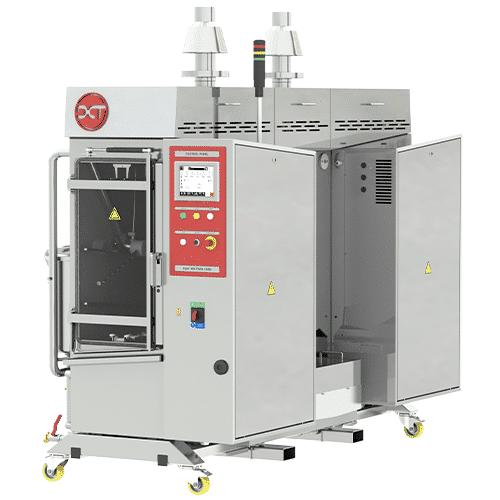
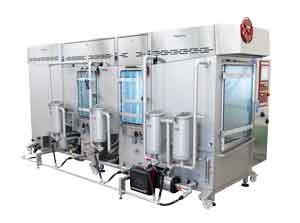
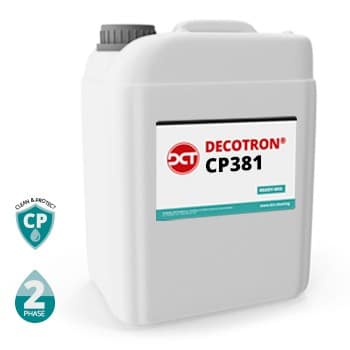




100% RESPONSIBILITY FOR THE CLEANING PROCESS
We take full responsibility for the functionality of the cleaning process.
Complete cleaning solutions
We can offer complete cleaning solutions for all existing applications.
Quality of cleaning systems
We manufacture cleaning systems exclusively in stainless steel because it has long-term advantages.
pure quality of cleaning agents
We care about the functionality of the cleaning chemistry, but also about ecology.
Technical and economic improvements
With every project, our greatest motivation is to bring the customer a better technical and economic solution.
Development and customization
By continuously developing our cleaning technologies, we are moving forward and responding to developments in the electronics industry.
Democenters Worldwide
We give customers the opportunity to actually test the cleaning solution.
Direct service Support
For us, service support does not end with the installation, it begins.